





The Buildings of the Malting Industry

|
| The Buildings of the Malting Industry, Amber Patrick, Historic England/Liverpool University Press, 2023, 204 pages, black-and-white and colour illustrations. |
Cereals have been subjected to the malting process since earliest times and malthouses and kilns sprung up across all counties in England. These have been traced and researched over decades by Amber Patrick, who compiled a major report for English Heritage (2004) and has now produced a definitive account of this once ubiquitous building type.
At the height of the industry’s activity from the late 1800s and up to around 1960, maltings towered above their surroundings in town and country, either next to the breweries they supplied or in the proximity of the fields of barley that provided the principal raw material. The east of England predominated, due to its dryer climate, but other factors such as access to road, rail or rivers and coastal transport were of economic importance. The malting process also depends on supplies of heat, and the Trent valley and coal-rich counties such as Nottinghamshire feature prominently in the book, together with Burton, the legendary home of British brewing in which four major maltings are identified. Strangely, Hertfordshire has been left out of the index, as has Ipswich, the former home of R and W Paul, maltsters, and the large breweries nearby.
Unpublished reports on individual sites are incorporated in the book, recording malthouses either demolished or retained in recent decades after becoming redundant. As the UK brewing industry underwent changes, many of its sites came under threat. Conversions to housing, storage or cultural uses are described, such as the famous Snape Maltings, Suffolk, where the extensive flat floor surfaces were adapted by Arup Associates and opened in 1967.
Before the industry had grown up and produced buildings as gigantic as Bass’s Sleaford Maltings (1906), it operated on a smaller scale. Malting and brewing were initially conducted at home or in micro-breweries attached to the inns they supplied. For these early times we are reliant primarily on Gervase Markham, author of The English Housewife (1615), which is referenced several times by Patrick in her intriguing second chapter on the 1500-1600+ era. In his book, Markham writes a chapter on malt, another on oats and a third on brewing. Alongside this source is Patrick Grattan’s Oasts and Hop Kilns (see Oasts and Hop Kilns: a history), where hops are thoroughly analysed for their own contribution. Will anyone now write about water? This is the third main ingredient, and no brewery in town or country could get by without a supply of water, preferably of the right quality.
Grattan and Patrick have given us two worthwhile volumes for the benefit of archaeologists, planners, architects and conservationists, and for other readers who might agree with Ogden Nash: ‘malt can do more than Milton will to justify the ways of God to man.’ In John Milton’s defence, he did write in praise of the ‘spicy, nut-brown ale’, for use on long winter nights, just as Markham calls beer ‘the very substance of all entertainment… by which the whole household is nourished and sustained.’ The two books thus place both malt and hops at the centre of social and economic history during vital phases of the nation’s development. The attractions of a good inn for travellers would include an efficient malthouse with brewery and cellar in-house, to provide its clients with the means of passing the evening pleasantly.
This article originally appeared as ‘Ubiquitous maltsters’ in the Institute of Historic Building Conservation’s (IHBC’s) Context 181, published in September 2024. It was written by Graham Tite, a member of the Brewery History Society.
--Institute of Historic Building Conservation
Related articles on Designing Buildings Conservation.
IHBC NewsBlog
IHBC sponsors Gardens Trust event 23-4 Sept 2026
.jpeg)
'Learning from the Past, Shaping the Future’ takes place in Milton Keynes
Renovations to Frank Lloyd Wright's Fallingwater complete
.jpg)
World Heritage Preserved project opens house for tours again
Shakespeare Birthplace Trust places Hall's Croft on HAR Register
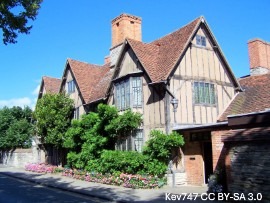
Stratford-upon-Avon home of Shakespeare's daughter is 'At Risk'
Lady Grange’s House repaired on St Kilda
.jpg)
National Trust for Scotland repairs stone cleit with link to famous island resident
Griff Rhys Jones on BBC Radio 4 Today programme
,_Green_Lane,_Derby.jpg)
The Victorian Society’s President unveiled its latest Top Ten Endangered Buildings 2026.
Need a MATE? Book your place now.

IHBC offers free webinars on applying for IHBC accreditation (Full & Associate).
UK Stained Glass Repository finds windows new homes
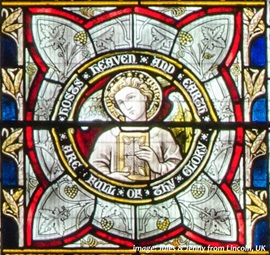
How are stained glass windows are rescued, stored and repurposed?
APPGEBE report sets high aims for quality
'Government must not sacrifice quality in drive to build 1.5m homes'
New measures protect Historic Shipwrecks from heritage crime

Underwater cultural heritage benefits from new HE guidance
How could the City of London skyline look in 6 years' time?

Visualisation shows approved planning applications as completed buildings
National Trust for Scotland calls for VAT cuts
Heritage neglect is encouraged by current policies
IHBC's 'Context' Issue 186 features Industrial Heritage

IHBC's members' journal reports on the challenges of conserving infrastructure
Book now for IHBC Annual School 2026

IHBC Annual School is taking place 18-20 June 2026 in Newcastle
RICHeS Research Infrastructure offers ‘Full Access Fund Call’
RICHeS offers a ‘Help’ webinar on 11 March
Latest IHBC Issue of Context features Roofing
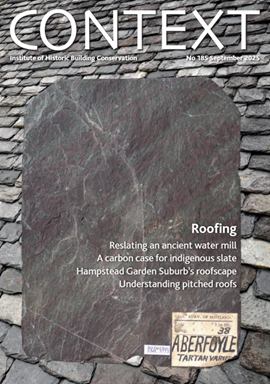
Articles range from slate to pitched roofs, and carbon impact to solar generation to roofscapes
Three reasons not to demolish Edinburgh’s Argyle House

Should 'Edinburgh's ugliest building' be saved?
IHBC’s 2025 Parliamentary Briefing...from Crafts in Crisis to Rubbish Retrofit
IHBC launches research-led ‘5 Commitments to Help Heritage Skills in Conservation’
How RDSAP 10.2 impacts EPC assessments in traditional buildings

Energy performance certificates (EPCs) tell us how energy efficient our buildings are, but the way these certificates are generated has changed.